Rune Seljetun is a freelance motion designer, character animator, and VFX artist who works almost entirely in Adobe, with After Effects making up roughly 80 percent of his day. He exports mostly to QuickTime and MP4, and turns to the Bodymovin plugin when a project needs HTML or JSON.
This case study looks at what happened when that pipeline met a job it wasn't built for: SVG animations for an iOS and Android app.
Table of contents
The challenge: when a trusted toolkit meets an unfamiliar format
The solution: a dedicated SVG tool that fits the existing workflow
The results: a project that shipped because the right tool existed
A project that shipped because the tool existed
The pick that earned its place
The challenge: when a trusted toolkit meets an unfamiliar format
Rune's toolkit covers a lot of ground. Some pieces take a couple of days, others half an hour, and his Adobe setup handles most of that range without much fuss. For the formats he ships most often, it's a workflow he trusts.
SVG animation is a different kind of job, though. When a cross-platform mobile app came along that needed animations in that format, his usual route wasn't the natural fit.
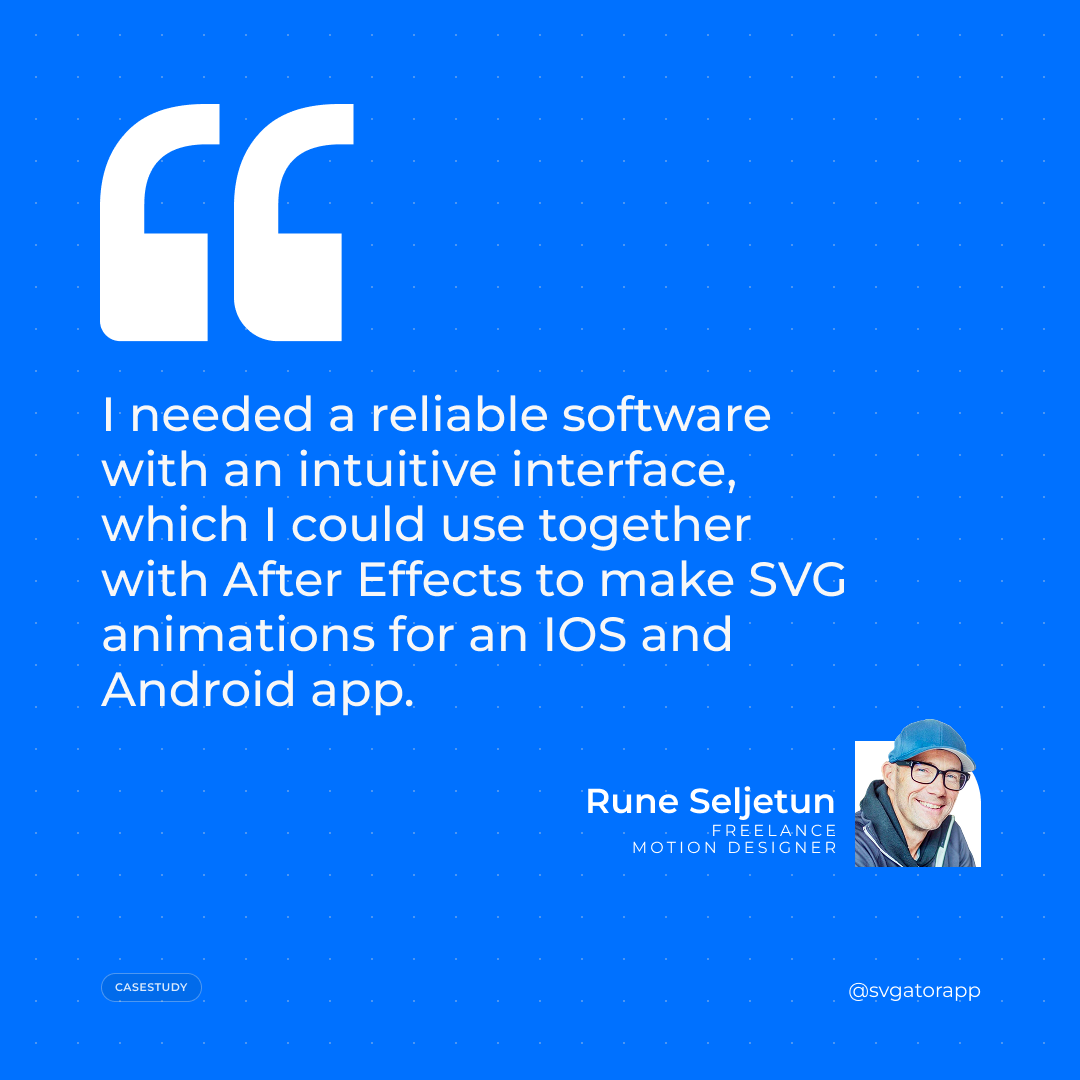
He wanted something that could sit next to After Effects and own the SVG side: reliable, quick to work in, and able to turn out animations ready to drop straight into an iOS and Android build. So instead of bending his existing setup into a shape it wasn't meant for, he went looking for the right tool for this specific part of the work.
The solution: a dedicated SVG tool that fits the existing workflow
His requirements were specific:
- Dependable software he could count on
- An intuitive interface, quick to work in
- A fit alongside After Effects, not a replacement for it
- SVG animations ready for a cross-platform app
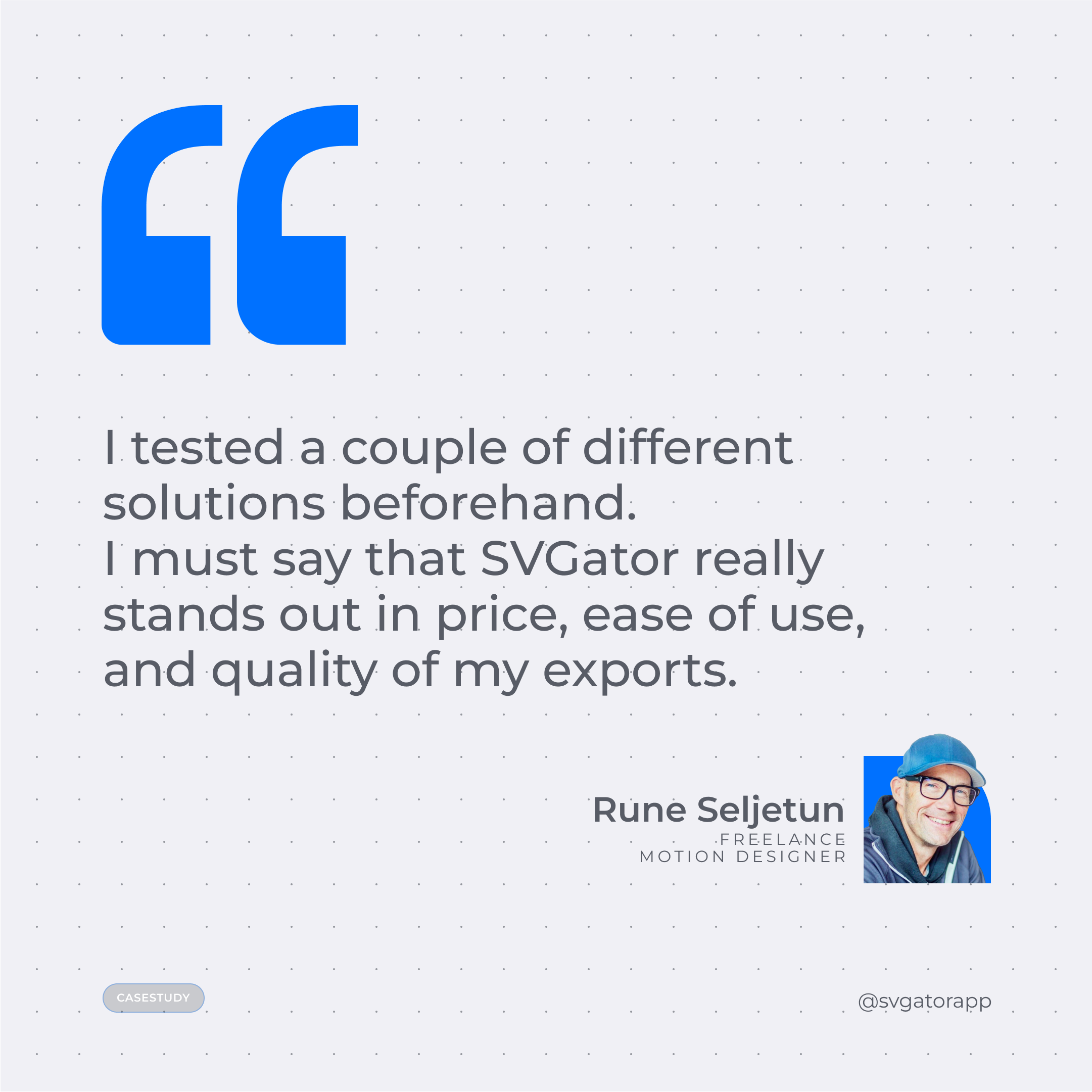
He didn't pick the first option he found, either. He evaluated several alternatives before committing, and SVGator came out ahead on the combination that mattered to him: price, ease of use, and the quality of its exports.
SVGator slotted in as the dedicated SVG layer his pipeline had been missing. Rune kept working in After Effects for what it does best, then brought in SVGator to build and export the app's SVG motion. He started from supplied illustration assets and animated them for the interface, with the SVG creation and export handled in one place.
The results: a project that shipped because the right tool existed
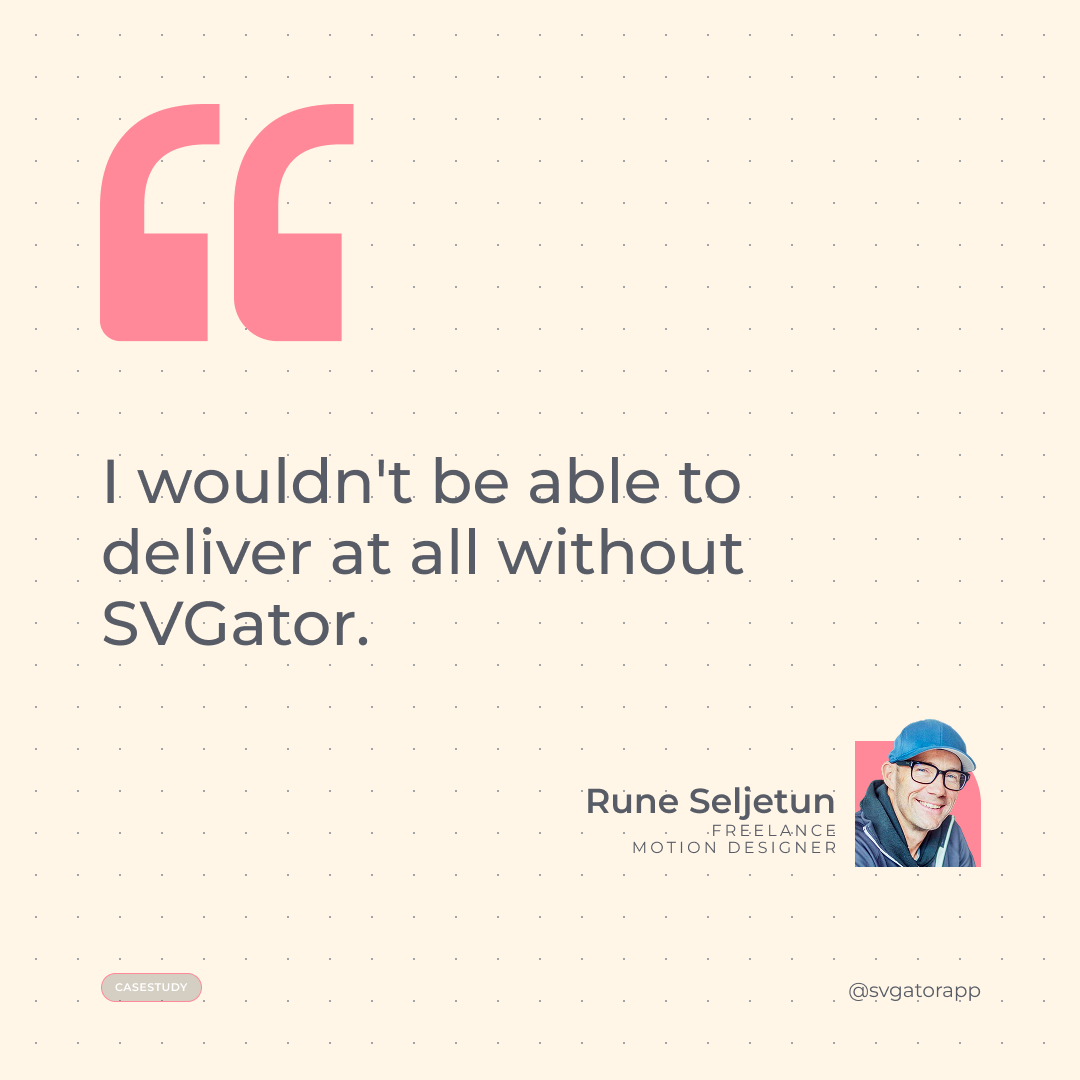
The headline result isn't a percentage. It's feasibility. Rune is direct that he wouldn't have been able to deliver the app project at all without SVGator. For a motion designer who already owns the heavyweight gear and knows how to use it, that says more than any time-saving figure.
A project that shipped because the tool existed
This wasn't a nice-to-have on the job. It was the reason the work got out the door. The app needed SVG animation. His usual route wasn't built to produce, and SVGator filled exactly that gap.
File sizes that stayed light
Testing and controlling file sizes was, in his words, a breeze. For app and web work, where every kilobyte counts, that's a real advantage rather than a footnote.

The pick that earned its place
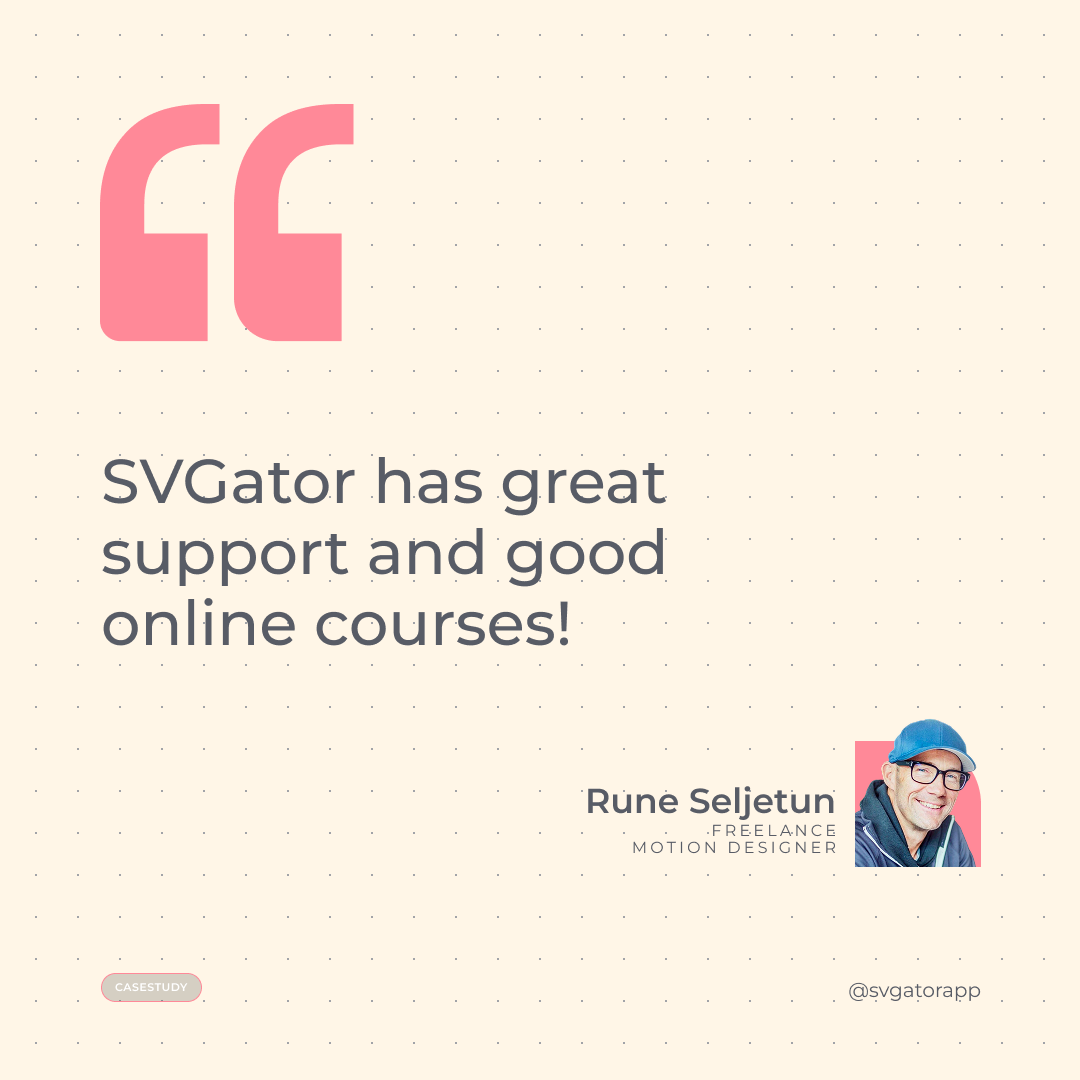
Out of everything Rune weighed up, SVGator landed on the combination that mattered to him: price, ease of use, and export quality strong enough to beat the rest. The support and online courses got him productive fast, which counts for a lot on a live project.
| Outcome | What it meant |
| Feasibility | Shipped a project he couldn't have delivered otherwise |
| File sizes | Easy to test and keep light |
| Export quality | High enough to beat his shortlist |
| Evaluation | Won on price, ease of use, and exports |
| Support | Fast onboarding via team and courses |
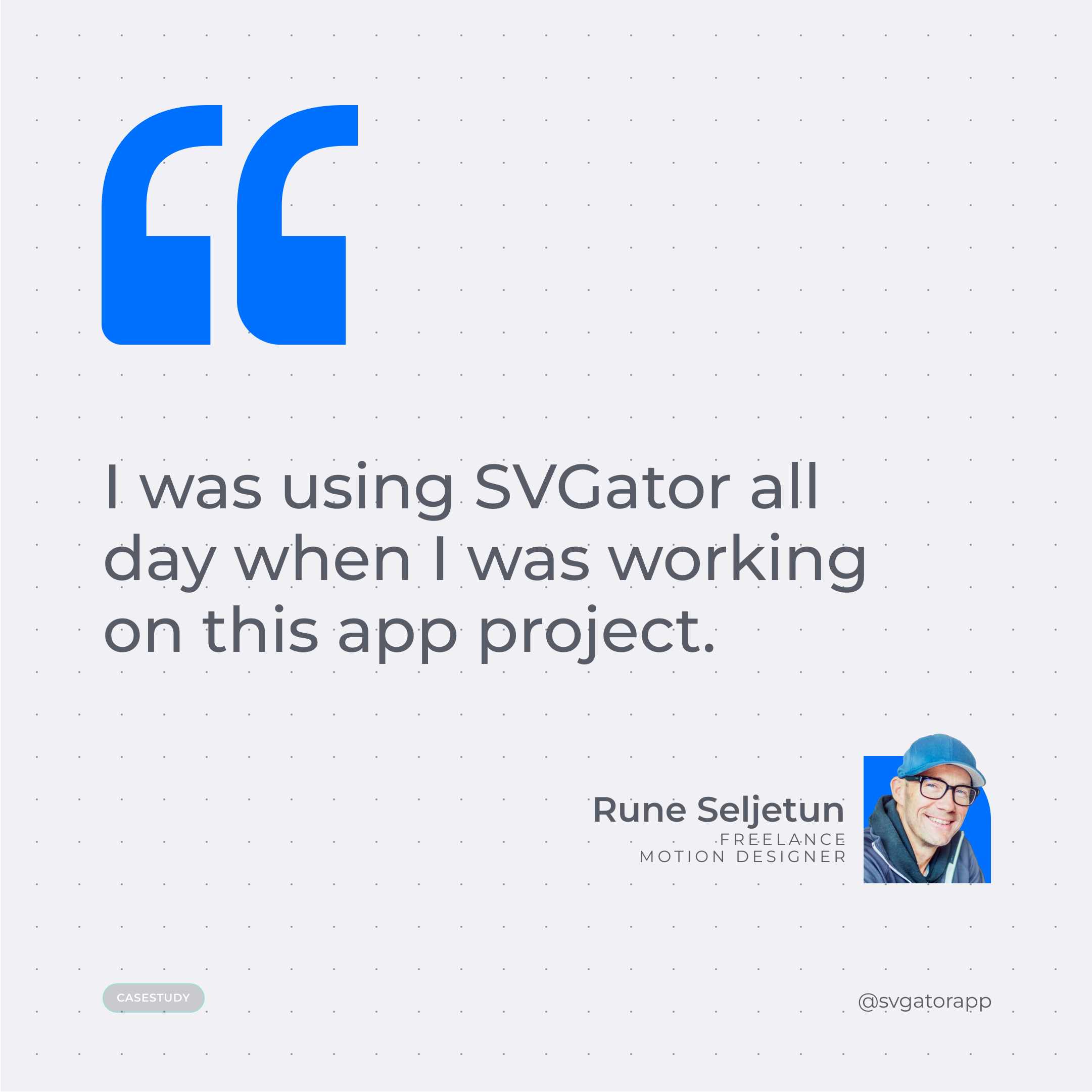
| Usage | In SVGator daily for the whole build |
Final thoughts
The most convincing endorsements don't always come from beginners discovering animation for the first time. Sometimes they come from a professional who already owns the serious tools, hits the edge of what they can do for a specific job, surveys the field, and finds something that crosses the gap.
When a project needs clean, lightweight, app-ready motion that a traditional pipeline struggles to produce, a browser-based option like SVGator can be the difference between a job that stalls and one that ships.