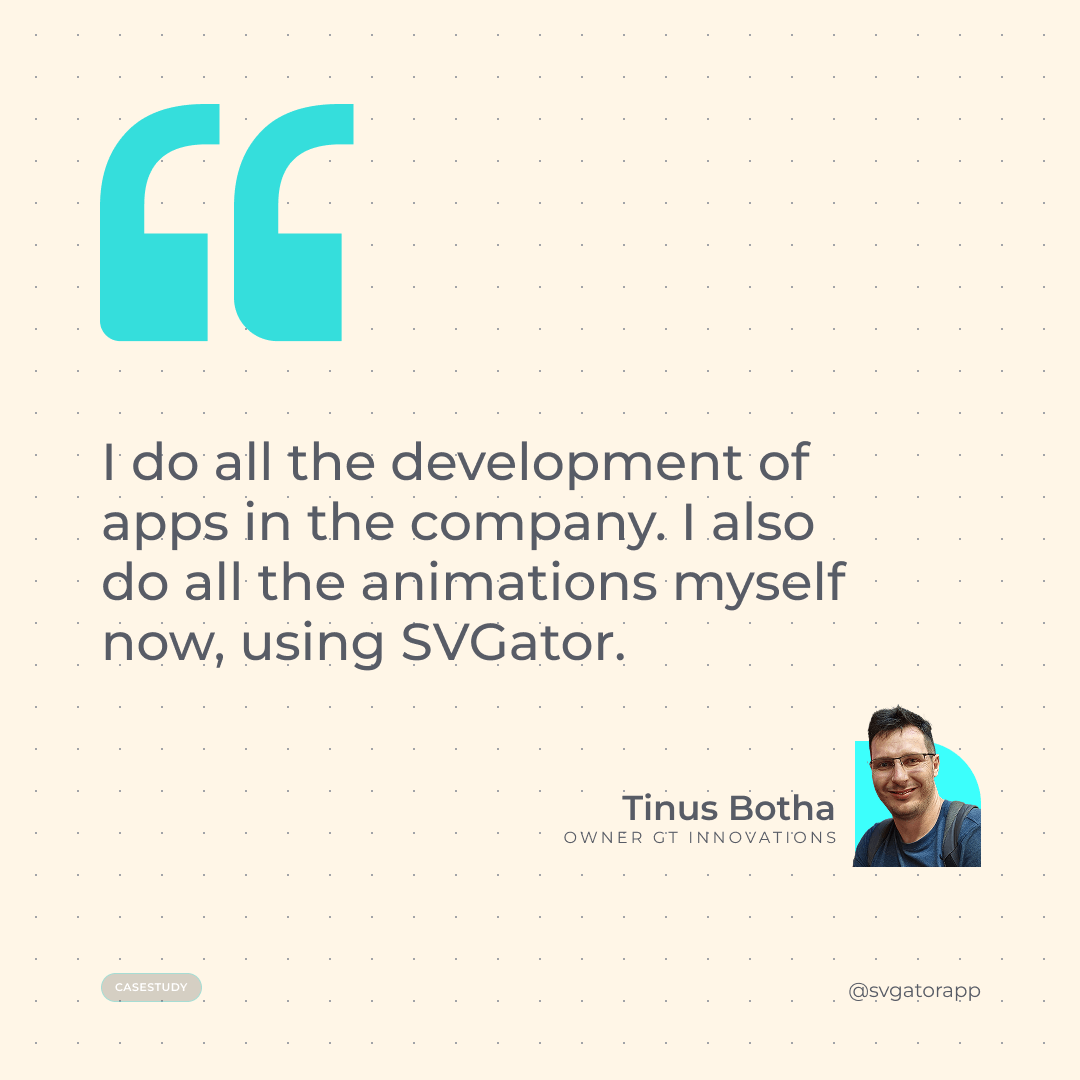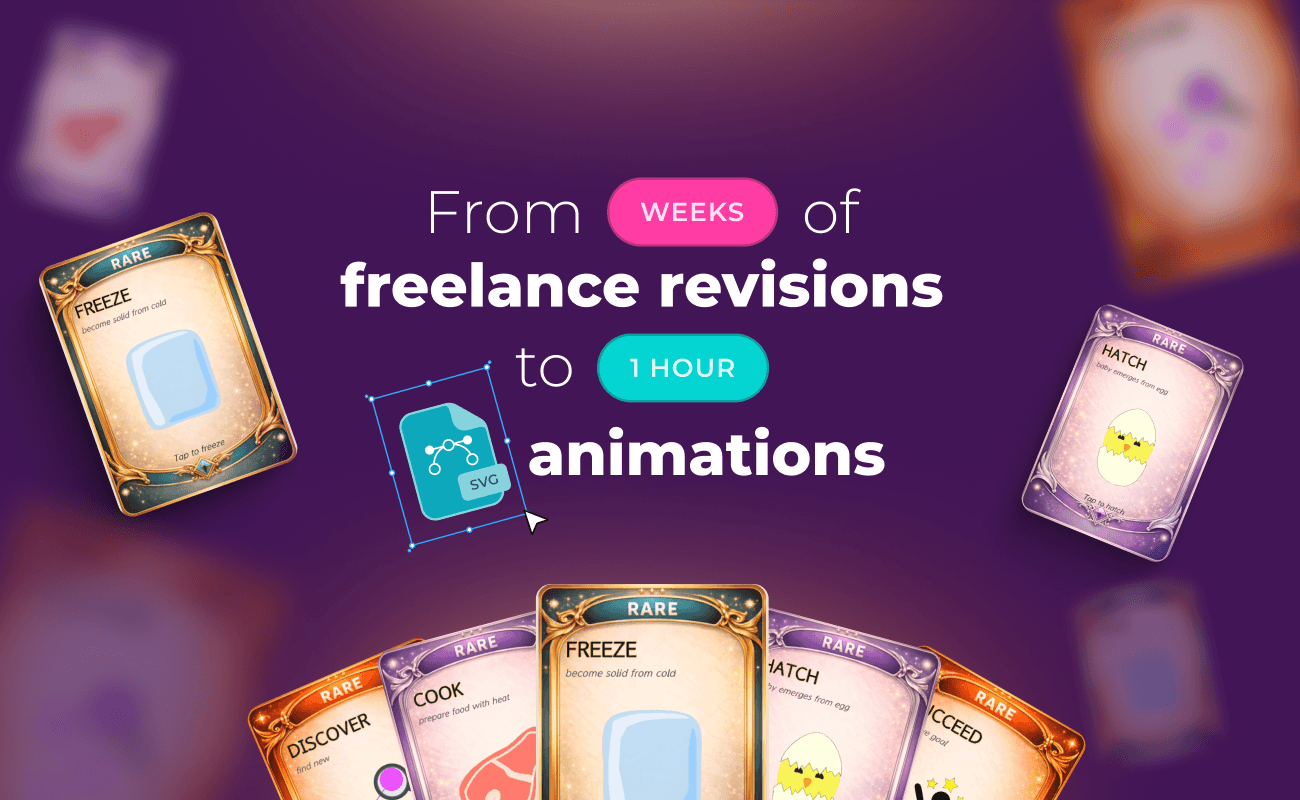
Tinus Botha is the founder and sole developer at GT Innovations, a one-person studio building Vocapack, a card-style vocabulary game for mobile. His stack is React Native for the app and Firebase for the backend. For everything except animation, he is a full-stack team of one.
This case study walks through how Tinus closed that last gap and brought SVG animation in-house.
Table of contents
- The challenge: Outsourced animations and a slow freelance loop
- The solution: An in-house motion design workflow
- The results: Faster turnaround and full workflow ownership
- Faster turnaround
- Predictable costs
- Animation that does a job in the product
- Full ownership of the workflow
- Final thoughts
The challenge: Outsourced animations and a slow freelance loop
Tinus' old workflow had one stubborn bottleneck. Every animation, no matter how small, had to leave the studio. He would write a brief, send it to a freelancer, and wait days for a first cut, plus more days for every round of revisions after that. A few rounds in, a basic piece of UI motion had stretched into a couple of weeks.
The waiting was only half the problem. The other half was translation. Freelance designers did not always pick up exactly what he was after, so every revision pass doubled as a re-brief. For a developer trying to ship a product, every revision day was a day the app sat still.
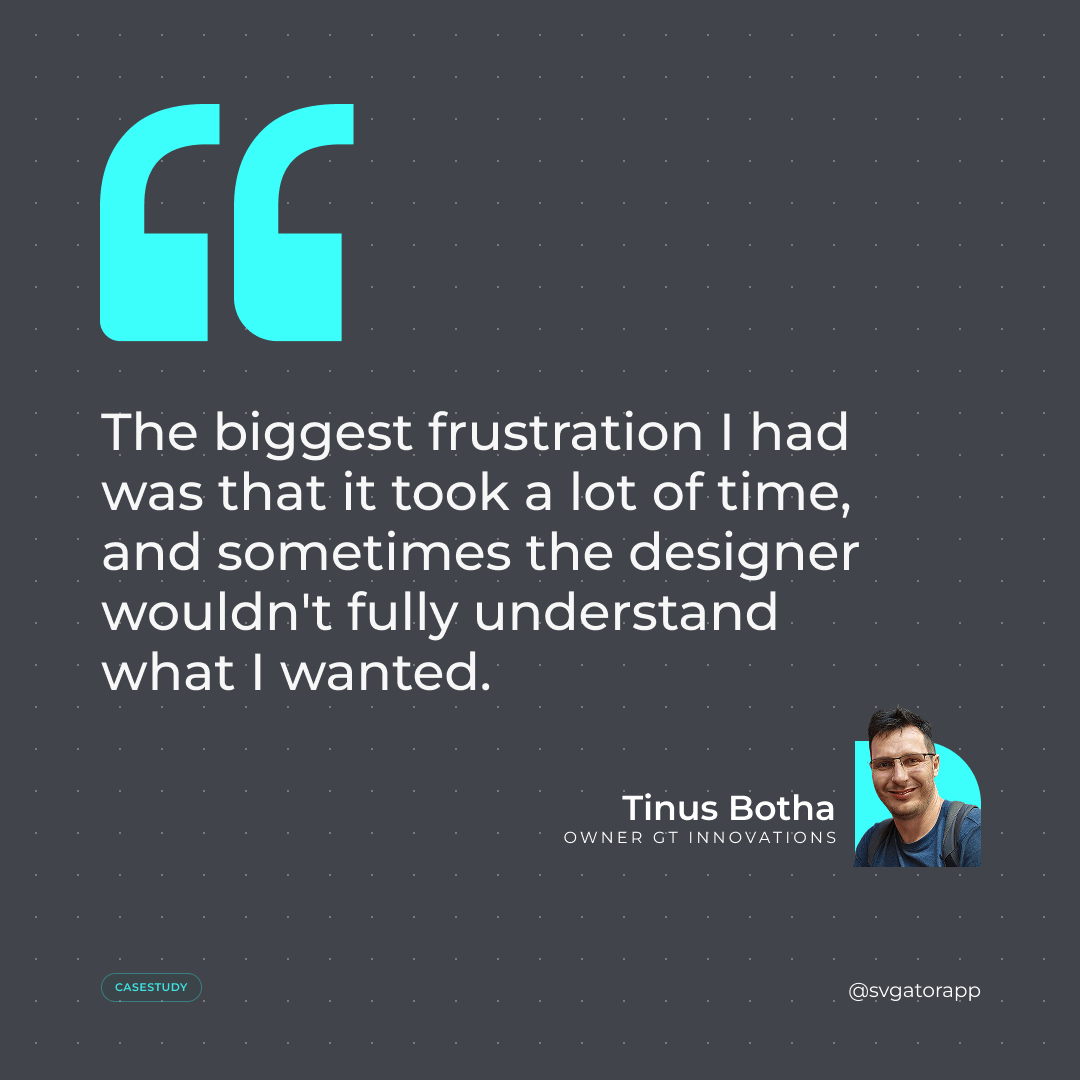
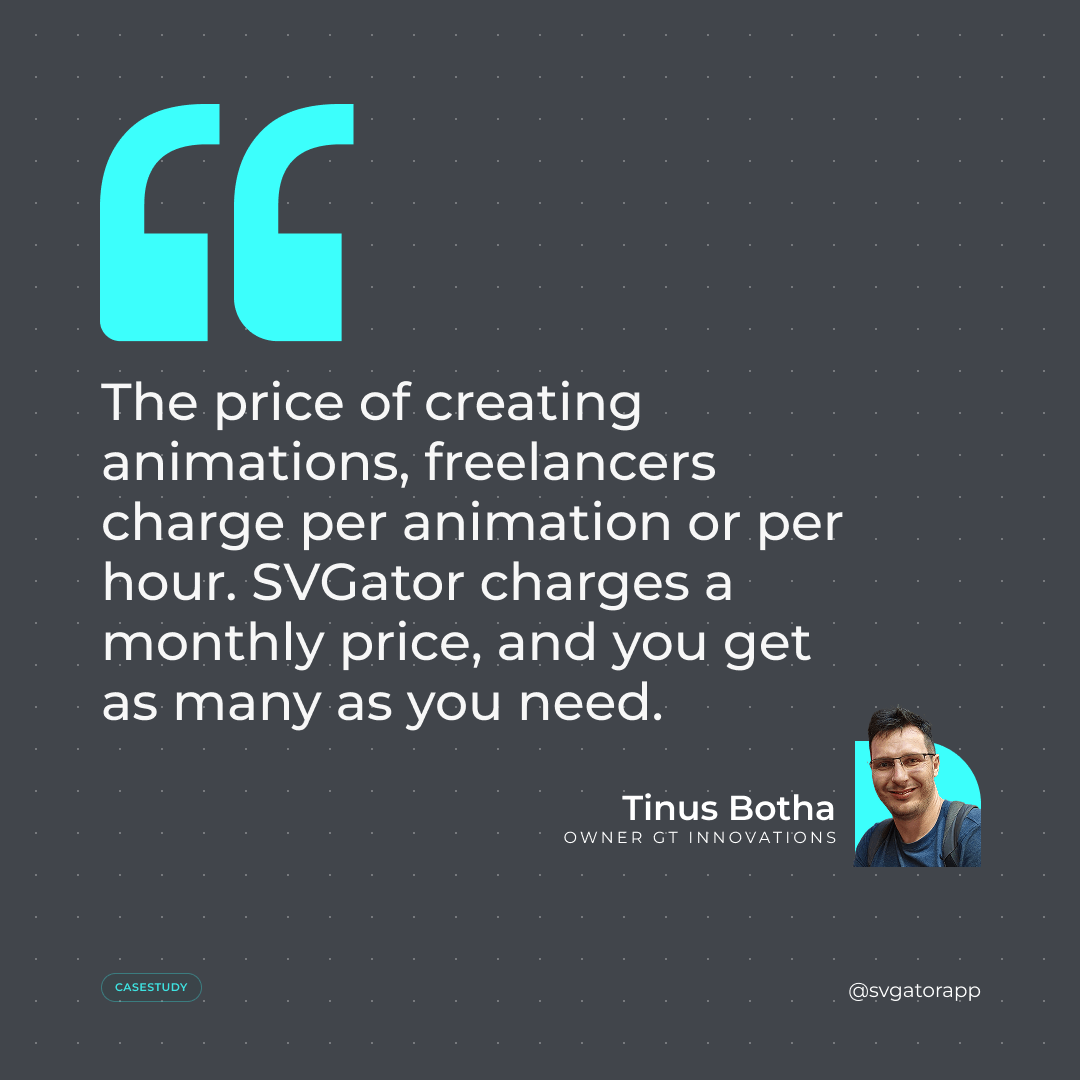
Then there was the cost structure. Freelance animators charge per animation or per hour, which turns motion into a variable line item that scales with use. For a small consumer app like Vocapack, where animation carries the card metaphor through the UI, that pricing model worked against the kind of iteration Tinus needed.
Animation also lived on a different clock from the rest of his work. Tinus could plan database changes and screen rebuilds into a sprint, but every motion piece had to wait for someone else's calendar to open up.
The solution: An in-house motion design workflow
The fix was simple in principle: stop outsourcing. The harder part was finding a way a non-designer could pull that off without first learning a full motion design tool.
SVGator turned out to fit. The editor handles both vector design and animation in one place, so a developer can build an asset from scratch and animate it without ever leaving for another app. For Tinus, that removed the whole design environment he had been outsourcing along with the work.
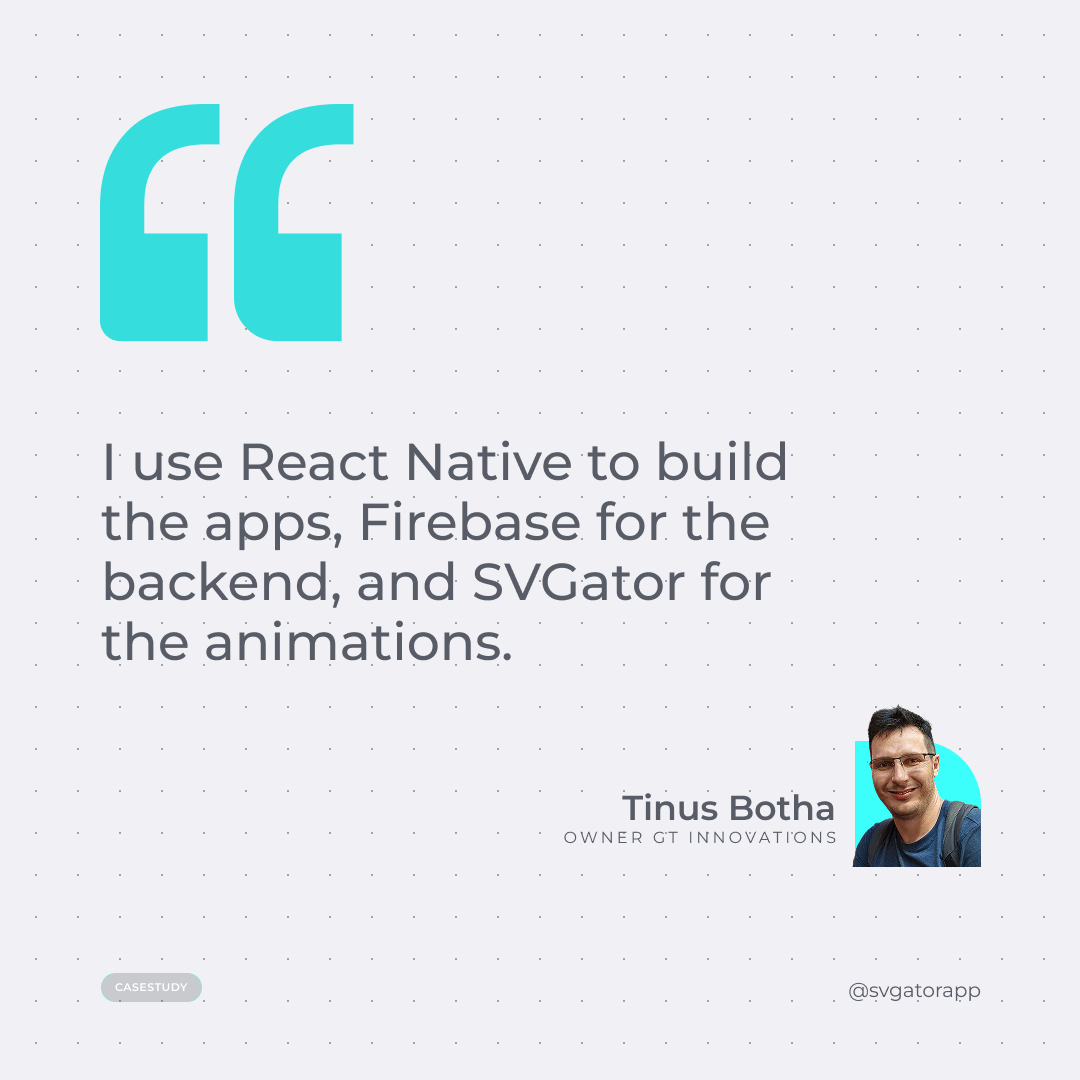
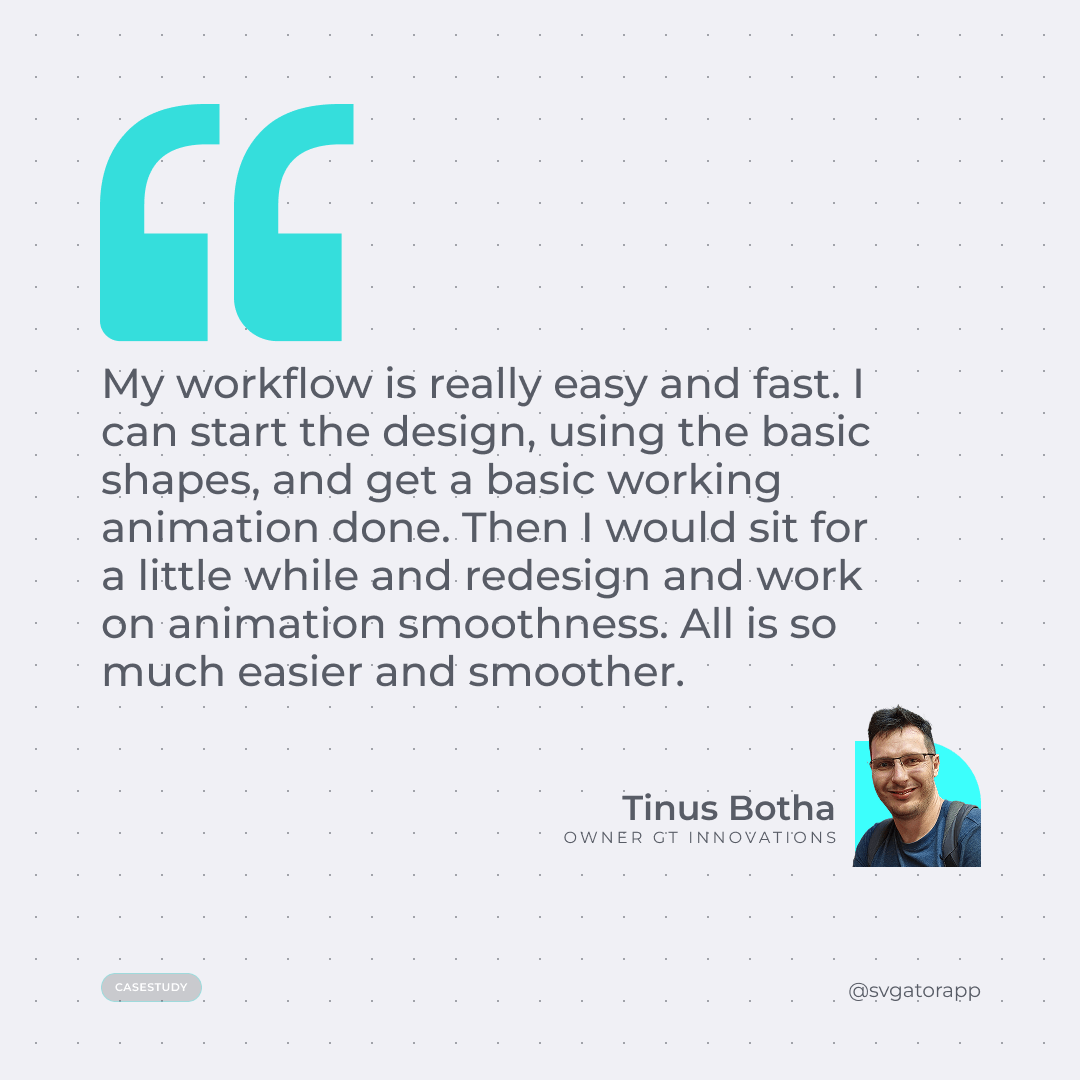
His current routine has fewer moving parts. He sketches the shape directly in SVGator, builds a rough working version to test whether the motion idea holds up, then sits with it and refines the design and the smoothness over a couple of passes. A basic SVG animation now goes from blank canvas to ready-to-ship in about an hour or two.
The toolchain barely changed in the process. SVGator stepped in where freelance designers used to sit, and the rest of the stack and the team stayed put.
| Stack layer | Before | After |
| Apps | React Native | React Native |
| Backend | Firebase | Firebase |
| Animation | Freelance designers | SVGator (in-house) |
| Revision loop | External back and forth | Iteration inside the editor |
| Cost model | Per animation or per hour | Flat monthly subscription |
The results: Faster turnaround and full workflow ownership
The bottleneck is gone. Animation is no longer a step that has to leave the studio.
| Phase of work | Old process (with freelancer) | New process (in SVGator) |
| Communicating the idea | Written brief, sometimes re-explained mid-revision | No briefing needed; idea and execution sit with the same person |
| Drafting | Freelancer drafts off-site over days | Built directly in the editor using native SVG shapes |
| Iteration | Notes sent, file versions returned | Refined live, with playback in the same window |
| Decision-making | Approve delivered file or request changes | Made in real time, as the animation takes shape |
Faster turnaround
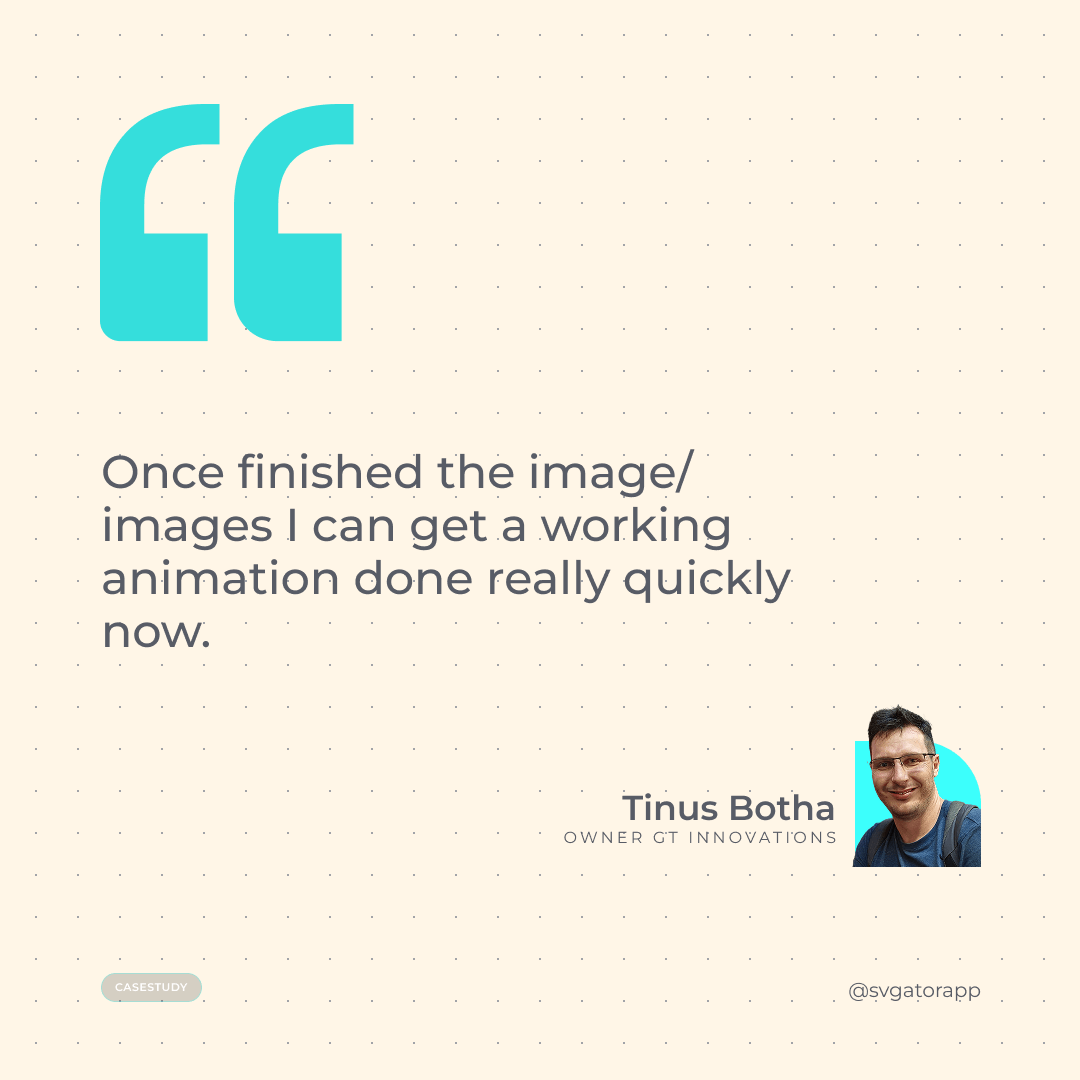
A basic animation that used to take weeks of revision cycles now takes about one to two hours from start to working file. Most of that time goes into the design itself, not into chasing replies. For a one-person studio, the difference is whether an idea stays in the backlog or makes it into the next build.
Predictable costs
Per-animation freelance fees were replaced by a flat monthly subscription. Whether Tinus ships one animation a month or twenty during the early days of a new project, the cost line stays the same. That removes a small but real piece of friction every time he considers adding motion to a screen.
Animation that does a job in the product
For Vocapack, the animations are not a finishing touch. Tinus uses them to carry over the ideas of cards into the UI itself, so motion is part of how the game communicates with the player rather than a layer added on top. That kind of functional motion depends on short cycles. An idea has to be tested in the product fast, and dropped if it does not carry the meaning Tinus wants it to. Inside the old freelance loop, that cycle stretched into weeks. With everything in the same toolchain now, motion can shape the product as it takes form, the way every other part of the UI does.
Full ownership of the workflow
The deeper change is about ownership. A developer who used to send every animation out the door now makes all of them himself, on the same machine where the rest of the product lives. Polish takes a small hit compared to a specialist animator. By Tinus' own honest read, that is a trade he is willing to make for full control and speed.
Final thoughts
For solo builders, the working assumption is usually that motion has to live with someone else, somewhere outside the team. What changed at GT Innovations was that assumption itself.
A developer with no animation background can run the whole loop in-house when the tooling fits the way developers already work, and SVGator slots into that role without asking him to become a designer first. The animations make it into the product on his own schedule, and the freelance step in the workflow is gone.