
SVG animations show up everywhere on the web: product loaders, animated logos, icon microinteractions, scroll-triggered illustrations, and hero text that actually holds attention. Looking through a wide range of animated SVG examples in one place is the fastest way to understand what the format can do and which techniques are worth using in your own work.
This list rounds up 140 SVG motion graphics across 16 categories, from simple animations to JavaScript-powered interactions and morph effects.
Table of contents
SVG product presentation examples
How to create a simple SVG animation in SVGator
Key takeaways
- SVG animation fits both small confirmation cues, like a checkmark drawing itself or a toggle sliding on, and larger storytelling pieces, like scroll-triggered product explosions and faux 3D rotations built from stacked SVG layers.
- The same SVG file scales from a 32-pixel animated icon to a full-width hero illustration without losing sharpness or adding weight.
- CSS runs SVG animation natively with no runtime cost, but pause, reverse, replay on user input, and scroll-triggered timing all require JavaScript.
Simple SVG animation examples
Not every animated SVG needs a stacked timeline. A bouncing loader, a gentle rotation, or a single-property fade can carry a page on its own when the underlying illustration is strong.
Simple animations also cover the parts of a page that other categories rarely do: floating shapes in a hero background, breathing illustrations on empty-state screens, micro-fades between tabs, and small scale-ins on images as they load.

SVG CSS animations
CSS is the fastest path to animated SVG on the web. It handles one-shot UI moments (navigation bars, loaders, toggles, checkbox states) with no runtime and no JavaScript. Browsers parse it natively, the file size stays small, and CSS keeps everything lightweight.
CSS does have limits. It cannot pause, reverse, or restart based on user input, it cannot chain animations conditionally, and scroll-driven timing needs JavaScript. If the animation has to react to something on the page rather than just play on its own, JavaScript is the better fit.
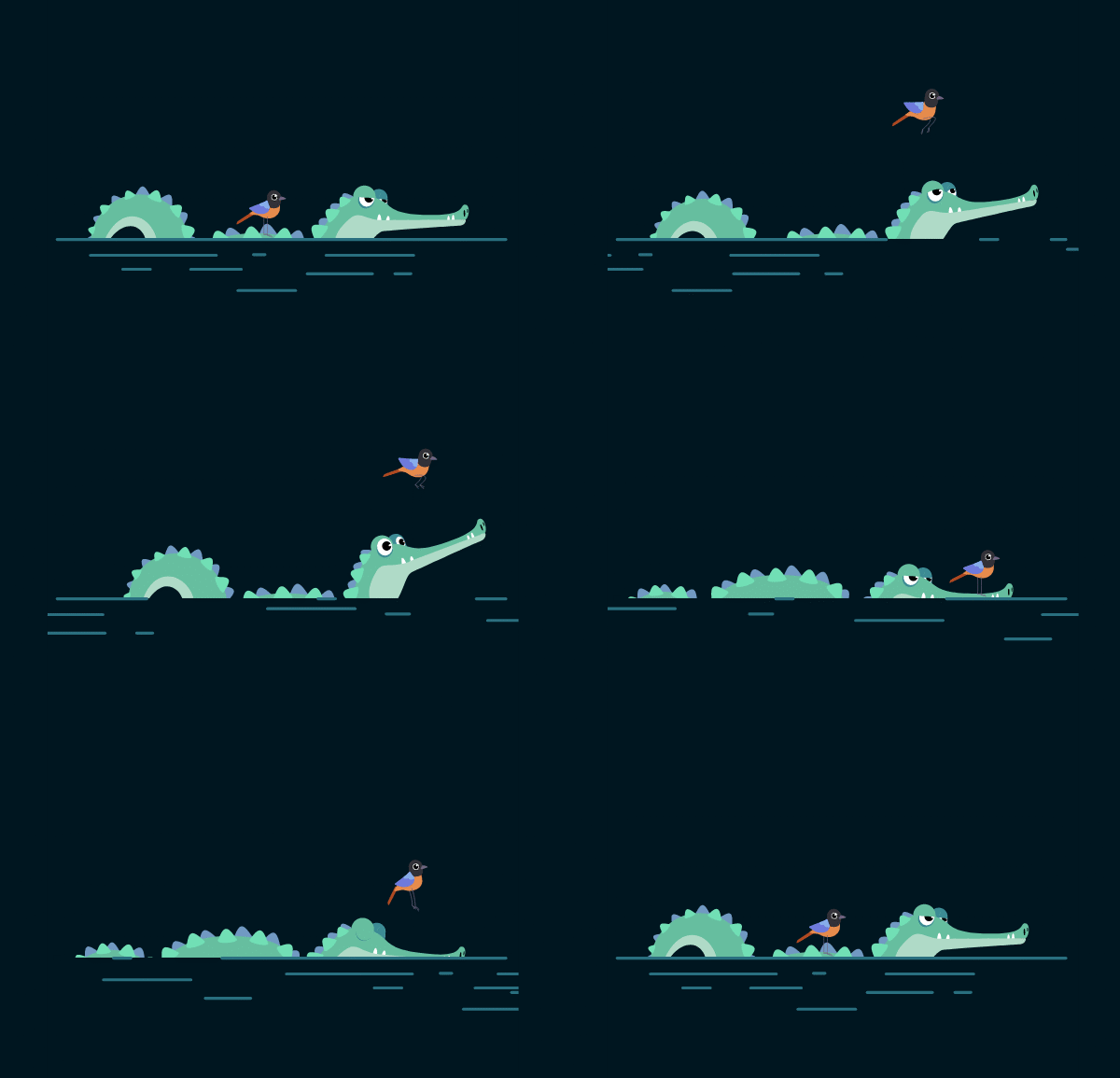
Impressive, huh? Give SVGator a try!
Create your own SVG animation using an easy & intuitive no-code animation tool.
JavaScript SVG animations
When a project needs full control over playback, start, pause, reverse, replay on scroll, or chained sequences triggered by user events, JavaScript is the right option.
The tradeoff is weight: JavaScript animations add a runtime dependency, increase file size compared to pure CSS, and require the browser to execute code rather than offload rendering to the compositor.
SVG logo animations
A logo that moves is a logo that sticks. The self-drawing line is the most common effect for monograms and logotypes, but color shifts, morphs, scale transitions, and full shape rebuilds all hold up well for brand identities.
A balanced static logo becomes more memorable in motion, but the common logo design mistakes that hurt a static version only get more screen time once movement is added. The base design is worth fixing before the animation step.
SVG loader animations
A good animated loader gives people something to watch instead of a blank screen and signals that something is still happening in the background.
Animated loaders earn their keep when they feel intentional. Keep the loop under three seconds so it does not read as stuck, match the motion to the brand instead of defaulting to a generic spinner, and pair the visual with a real progress indicator whenever loading times stretch past five seconds. Jerky keyframes and sudden color shifts read as glitches, so smooth easing matters more here than in most UI animation.


Animated SVG icons
Animated SVG icons do a lot of quiet work. They confirm user actions, draw attention to fresh notifications, and add personality to otherwise flat UI.
A checkmark that draws itself, a heart that pulses once, a trash bin that tilts before deleting, all of these reinforce the action the icon stands for. Keep the animation under 500 milliseconds so the feedback feels tight, and trigger motion on user action rather than looping forever, since constant motion competes with the content around it.

Animated button examples
Buttons are the biggest CTAs on the page, which makes them the best place to invest a little motion design. A ripple on click, a color shift on hover, a subtle scale on focus, or a shape morph when the button hits a disabled state: each effect confirms the action and can nudge click-through in the right direction.
Animated toggle buttons
Toggle switches carry more weight than their size suggests. A smooth transition from off to on confirms the action, signals the current state, and adds character to a setting that would otherwise be plain.


SVG line animations
Handwriting, self-drawing, and self-erasing effects are some of the best ways to animate text and line-based illustrations. Path animation might look complex at first glance, but it comes down to tweaking offset and dash properties over time. Dotted and dashed line variations follow the same logic. Most of the effort happens when drawing the path itself, not when animating the movement along it.

Animated characters
Character animation is one of those things that looks impossible until you actually do it. A cartoon mascot that reacts to hover feels interactive, a walking character gives a loading screen something to watch, and a face that nods during onboarding confirms the user is on the right track.
Morph animation examples
Morph animations blend one shape smoothly into another. They work well for logos, illustrated loops, and playful state transitions where one element has to become another. The technique comes down to matching node counts and adjusting point positions over time, with the SVG renderer handling the rest.
Morphing animation works best between shapes that share some structural logic: circle to square, leaf to flower, one letter to another. When the two shapes are too different, the intermediate frames turn into visual noise and the effect breaks down. Matching paths with a similar number of anchor points is usually the difference between a clean morph and a blurry in-between.

Faux 3D SVG animations
SVG is a 2D format, but that does not stop it from looking three-dimensional. The most convincing faux 3D effects rely on stacking multiple SVG layers and animating them at slightly different speeds. A front layer that moves faster than a back layer instantly reads as depth. Pair that with a directional shadow that updates as the object rotates, and the flat vector starts feeling solid.
Isometric illustrations are another strong candidate: their built-in perspective already suggests three dimensions, so even a small rotation or float makes the scene feel alive.
SVG text animations
A stylized SVG text animation does more than decorate. It anchors the message, sets the mood, and usually outperforms a static headline at holding attention.
Most SVG text animations come down to three core approaches: animate the stroke to create a self-drawing effect, animate the fill for color reveals, or convert the type to paths so each letter can animate on its own timeline. The approach you pick depends on how much control you need over individual characters and how the final effect should feel.

SVG product presentation examples
Product presentations perform better when the item actually moves. Animated SVG can rotate a device, explode a diagram into labeled parts, highlight features one by one on scroll, or walk a visitor through a before-and-after comparison. Because SVG renders as code rather than a raster image, these presentations stay sharp at any screen size without bloating the page.
Data visualization animations
Animated data visualizations turn static numbers into something people actually read. Bar charts that grow on scroll, donut charts that fill as percentages count up, line graphs that draw themselves from left to right, and dashboards where each widget enters in sequence all make data easier to absorb.
Keep data animation purposeful. A bar that grows from zero helps the viewer compare heights; a pie slice that fans open draws the eye to the largest segment. But gratuitous motion (bouncing grid lines, spinning labels, pulsing axes) pulls attention away from the numbers and makes the chart harder to read. The best animated charts finish their entrance within two seconds and then sit still, letting the data do the talking.
UI animation examples
A full interface has dozens of surfaces that benefit from motion. Page transitions that slide content in and out, tab switches with crossfade effects, accordion sections that expand smoothly, tooltip entrances, notification badges that scale in, skeleton screens that pulse while real content loads, and scroll-progress indicators that fill a thin bar across the top of the viewport are all small touches that make a UI feel responsive and polished.
How to create a simple SVG animation in SVGator?
Creating a simple SVG animation in SVGator takes five steps.
- Draw The Shape: Use the Rectangle tool to draw a rounded rectangle for the bubble, then add a smaller square rotated 45 degrees to form the tail. Select both shapes and group them into a single layer called "message bubble".
- Add Animators: Select the group, open the animator list, and add a Scale animator followed by a Rotate animator. Each one creates its own track on the timeline.
- Animate The Scale: Set the scale to 0 at the start of the timeline, move the playhead to around 1 second, and raise the scale to 1.1, then bring it back to 1 at 1.5 seconds. This produces the bounce on entry.
- Animate The Rotation: Start the rotation at -10 degrees, move the playhead to 1 second, and set it to +5 degrees, then return it to 0 at 1.5 seconds. This adds a subtle wiggle that pairs with the bounce.
- Preview And Adjust: Hit play to see both animators running together, then fine-tune individual keyframes to smooth the timing or change the feel of the motion.
Final thoughts
Learning to animate SVG starts with picking the one effect that caught your eye and trying to recreate it. All of the animations in this list can be built in SVGator, which is the quickest path from a static vector file to a working animated SVG without writing code.