Steve Bramley is a senior developer at Impact Digi, where he builds bespoke websites for clients across Australia. Almost every project includes motion graphics. The ambition to create compelling brand animations was always there, but the tooling imposed a ceiling on what he could achieve within client budgets.
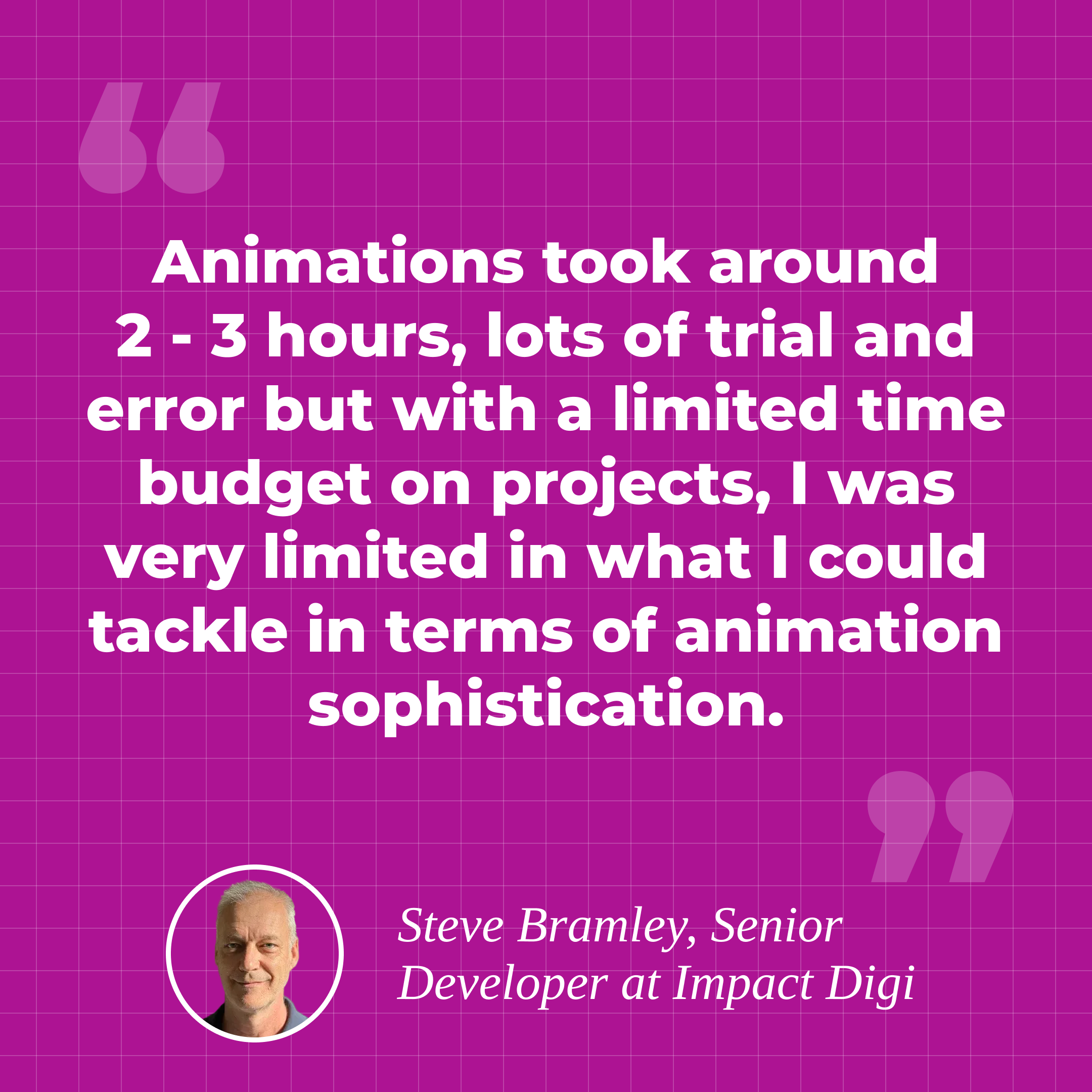
Hand-coding SVG animations with CSS and SMIL took 2 to 3 hours of trial and error. He knew what stories he wanted to tell through motion, but the process of getting there consumed too much of his limited time. SVGator changed that equation entirely. Basic animations now take 10 to 15 minutes, but the real value lies elsewhere. Steve now creates sophisticated animations that would have taken too much time to hand-code, all within the project budgets.
Table Of Contents
The Challenge: Time Constraints Forced Simple Animations
The Solution: Timeline Control With Vanilla SVG Output
The Results: From Simple Animations To Brand Storytelling
The Challenge: Time Constraints Forced Simple Animations
Steve Bramley’s philosophy is simple: stay as vanilla as possible. No heavy frameworks. No external libraries. Lightweight, dependency-free code that performs well and remains maintainable over time.
This approach extends to animation. Steve works with WordPress, HTML, SCSS, JavaScript, and React. Most client websites get an animated logo or a visual feature element. For years, he built these animations by hand using SVG with CSS and SMIL.
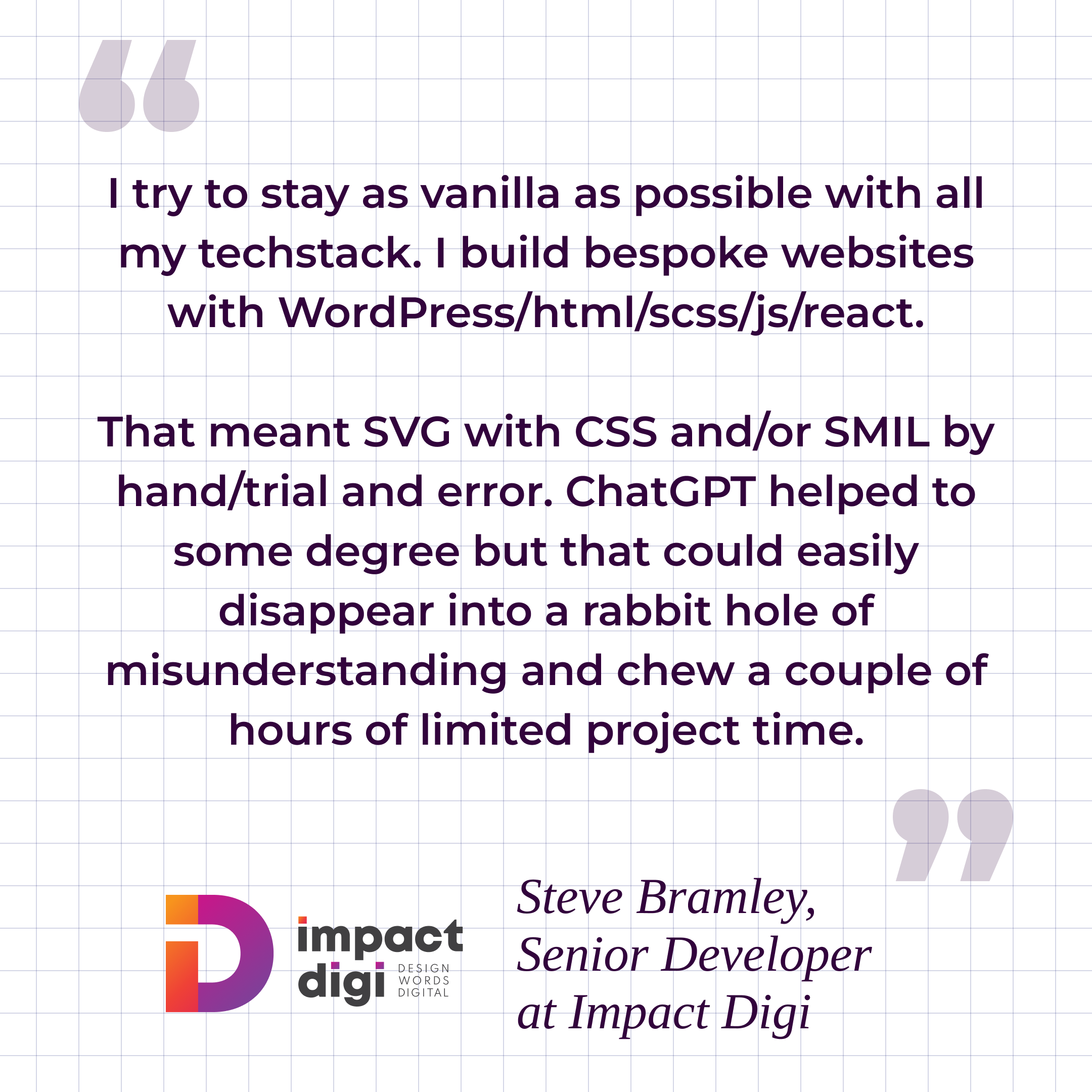
The process worked, but it was slow. Each simple animation took around 2 to 3 hours of trial and error. AI tools helped with code generation, but those sessions often disappeared into rabbit holes of misunderstanding that consumed limited project time.
The constraint was never the skill. Steve could hand-code any animation given enough time. The problem was that project budgets did not allow enough time. He was forced to keep animations basic, even when he envisioned something more sophisticated.
| Challenge | Impact |
| Hand-coding SVG animations | 2-3 hours per animation |
| Trial and error workflow | Limited animation sophistication |
| AI-assisted coding | Often led to time-consuming rabbit holes |
| Fixed project budgets | Forced simplicity over ambition |
| No visual feedback | Difficult to iterate and refine |
The Solution: Timeline Control With Vanilla SVG Output
Steve needed a tool that matched his zero-dependency philosophy. Most animation software exports formats that require JavaScript players or external libraries. That did not fit his tech stack.
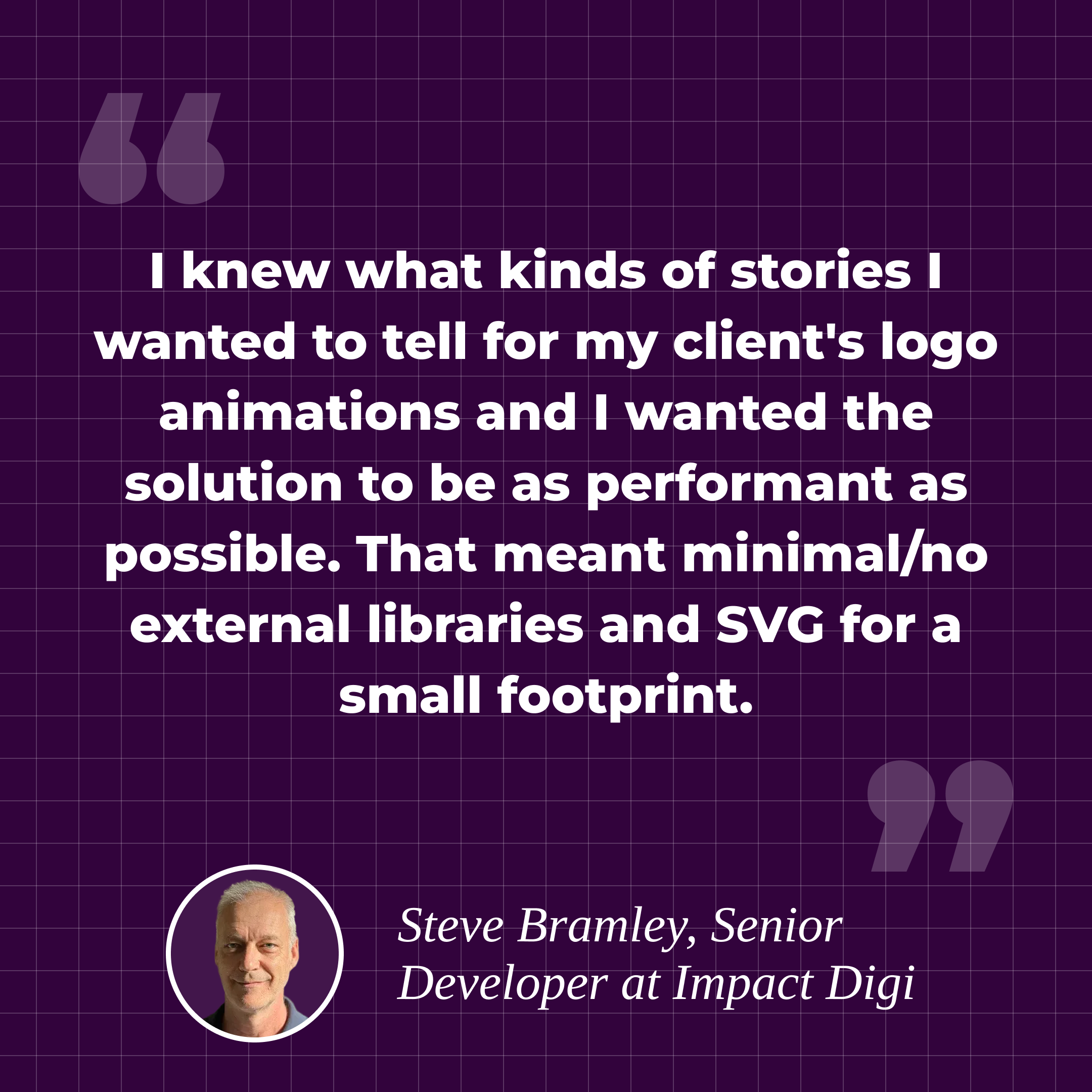
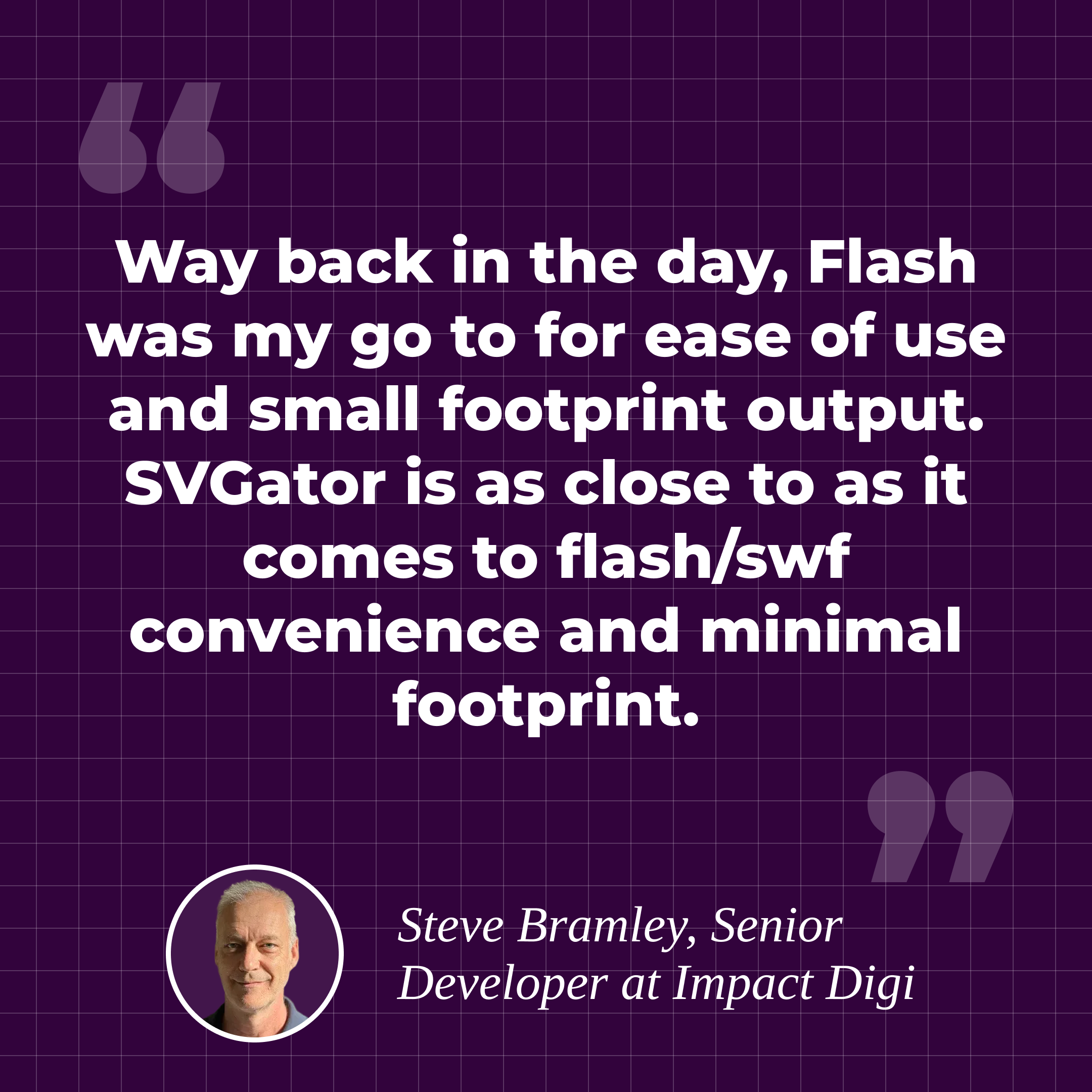
SVGator was different. It exports vanilla SVG. No players. No frameworks. No dependencies. The output is a single, self-contained file that works exactly like the hand-coded animations Steve was already creating, but without the hours of trial and error.
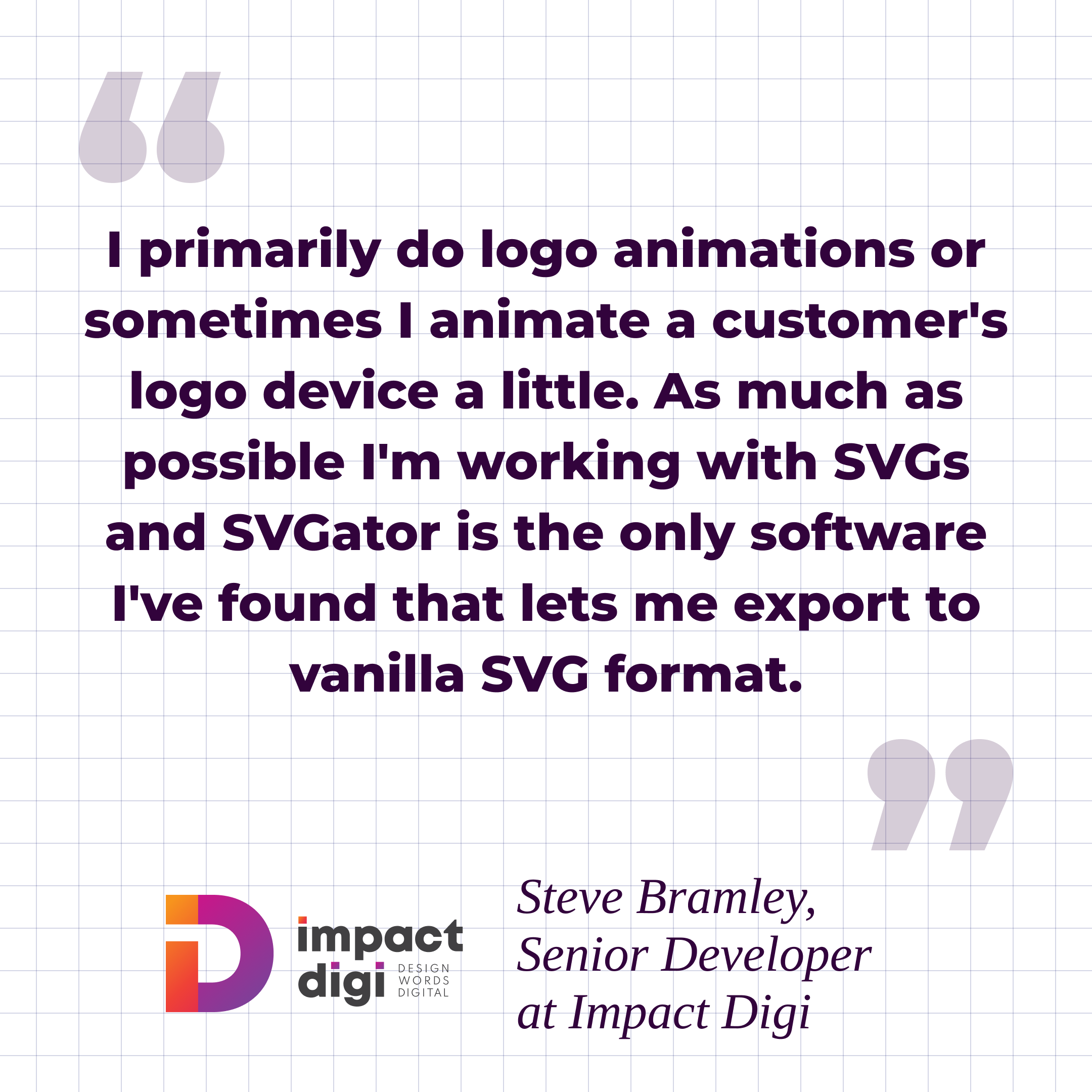
The interface felt intuitive from the start. Steve could import his vectors and animate them visually using a timeline. Only the elements he assigns appear on the timeline. When he hides an element on the canvas, it disappears from the timeline too. This focused workspace lets him concentrate on exactly what he is animating without distraction.
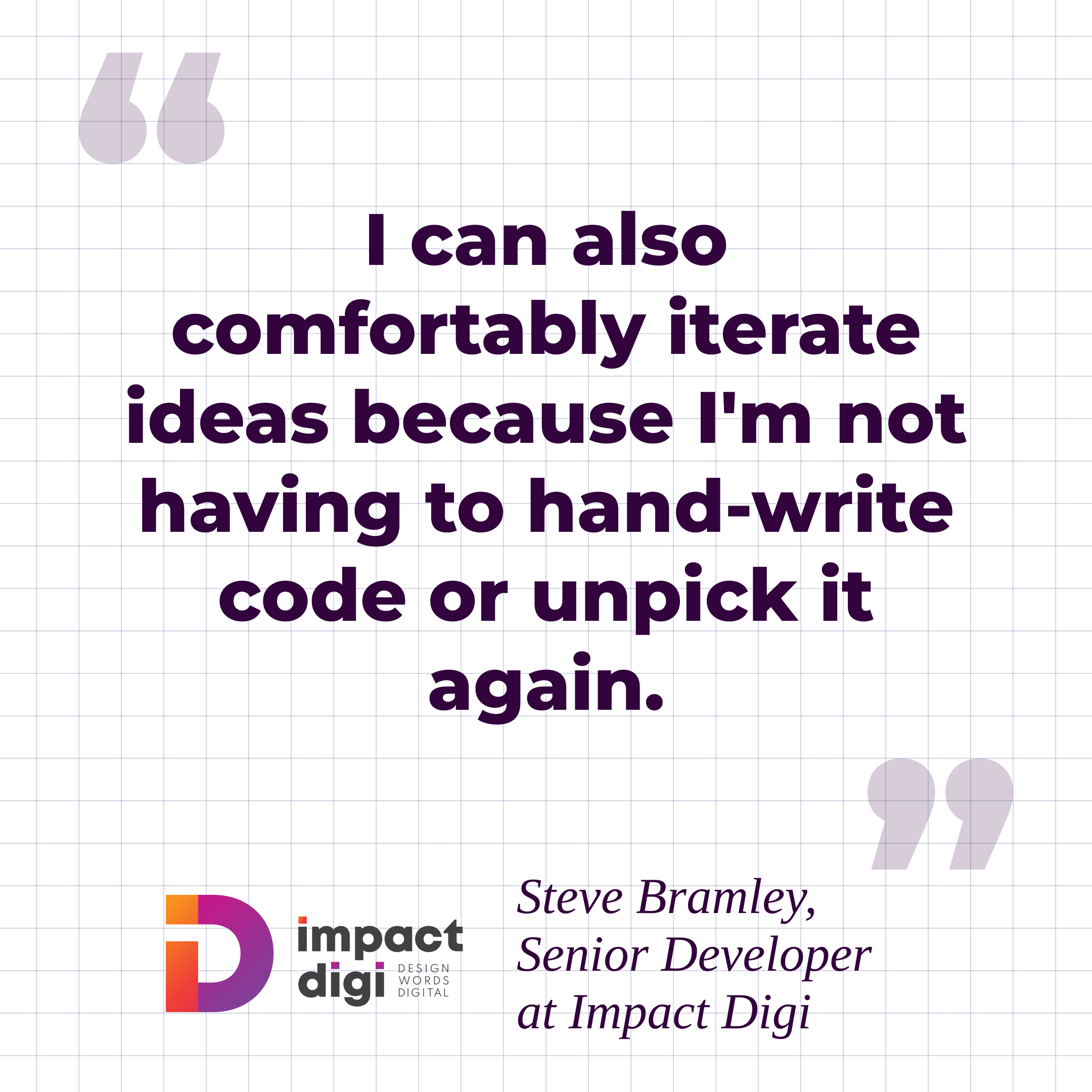
Iteration became comfortable. Instead of rewriting code or debugging syntax errors, Steve could explore animation ideas visually. Adjust timing. Try different easing curves. Refine motion until it felt right. All without touching code.
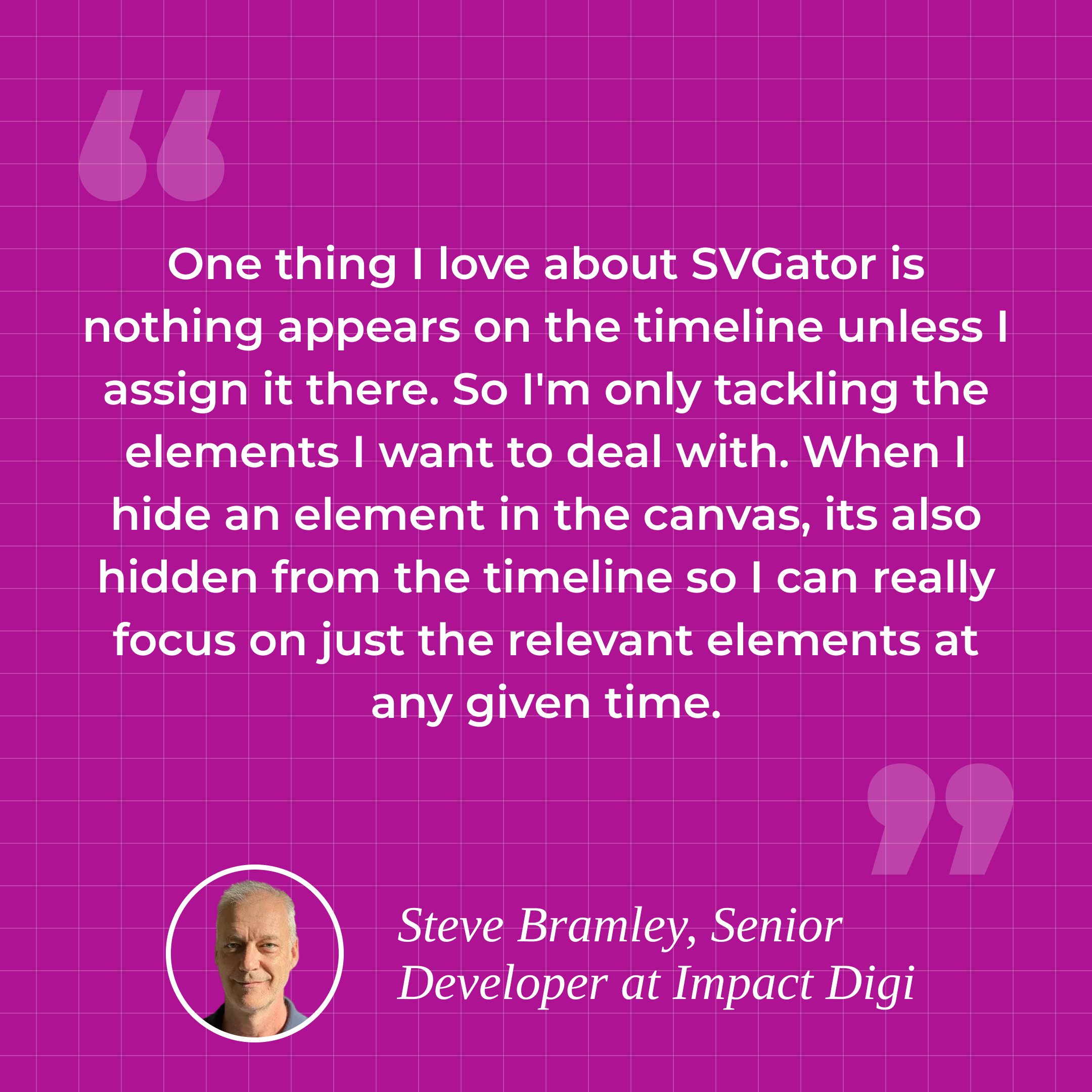
For Steve, the experience recalled an earlier era of animation. Flash was once his go-to tool for ease of use and a small output footprint. SVGator brings that same convenience back, but built on modern web standards and without the proprietary format lock-in.
The Results: From Simple Animations To Brand Storytelling
The transformation was not just about speed. It was about what became possible within the same constraints.
Creative Capability Uplift
Animations that would have taken 4 to 10 hours to hand-code are now achievable in the same timeframe Steve used to spend on basic motion. The depth and scope of what he can deliver have expanded dramatically.
He no longer has to choose between ambition and budget. Complex logo animations with sequenced reveals, layered motion, and refined timing are now realistic deliverables, not theoretical possibilities.
Iteration plays a big role. Because changes happen visually rather than through code rewrites, Steve can explore ideas freely. He is not committed to an approach the moment he starts writing code. Motion can evolve until it tells the right story.
Time Savings
The numbers are significant, even though Steve considers them secondary to the creative uplift.
Basic animations dropped from 2 to 3 hours down to 10 to 15 minutes. Complex animations that were previously not feasible within budget are now achievable in the same timeframe. Iteration shifted from slow cycles of rewriting and debugging code to fast, visual, non-destructive adjustments. And the output remains vanilla SVG with zero external dependencies.
Workflow Integration
Almost every website Steve builds now includes an SVGator animation. Logo animations are the primary use case, a repeatable, high-value deliverable tied directly to brand identity.
He currently uses the tool a couple of times per month, but as Impact Digi grows, he expects that to increase to 4 to 6 hours per week. The workflow fits naturally into his existing process.
The Takeaway
For developers who already know how to code animations, the question is not whether a visual tool can match their skill. The question is whether it can remove the ceiling on what they deliver.
Steve's story shows that the right tool does not replace developer expertise. It amplifies it. SVGator fits performance-conscious tech stacks because the output is vanilla SVG with zero dependencies. No JavaScript players. No external libraries. Just clean, lightweight code that works across browsers and devices.
The result is not just faster production. It is the ability to deliver brand storytelling through motion within the same project constraints.